What is an amino acid cleanser?
An amino acid cleanser is a face wash whose main cleansing agents, called surfactants, are made from amino acids. Surfactants are what let water carry away oil, sunscreen, and daily buildup. The type you use decides much of how your skin feels afterward.
The term is not a strict category. A product can use the phrase while also containing other surfactants, so the ingredient list tells you more than the front of the bottle.
Why does a cleanser leave skin feeling tight?
A 2026 study in ACS Omega explains that surfactants can disrupt the lipid structure of the outer skin layer and unsettle its proteins. When that happens, skin may feel dry, tight, or stripped after washing.

Some surfactants do this more than others. In that study, amino acid-based and nonionic surfactants were more likely to be mild on skin cells than other groups. The limit is important: it used cells in a lab, not people, so it points in a direction and does not predict how your face will respond.
How do the main surfactant types compare?
A second ACS Omega paper, from 2025, tested how surfactants affect proteins in the lab. It describes sodium lauryl sulfate as a standard surfactant with high irritant potential, and it describes glutamate-based ones as known for gentle cleansing. The glutamate point is background, not a result from that test.
| Surfactant family | Example names on a label | What studies suggest |
|---|---|---|
| Sulfates | Sodium lauryl sulfate | Strong cleansing, high irritant potential in lab tests |
| Amino acid-based | Disodium lauroyl glutamate, disodium capryloyl glutamate | More likely to be mild in cell tests |
| Nonionic | Names vary by product | Also more likely to be mild in cell tests |
Both papers are lab studies, so they show tendencies, not guarantees for every face.
How do you find one on a label?
Read the first several ingredients after water. Look for names that include glutamate or glycinate, and check whether a sulfate sits near the top. Then use the cleanser as part of your routine and notice how your skin feels once it dries.

A comfortable after-feel is the clearest sign. If your face feels squeaky, tight, or itchy, the cleanser is probably too strong for you, whatever the label says. For more on this, see how to wash your face without stripping it and can sensitive skin use a foaming cleanser.
Where does a cream-to-foam cleanser fit?
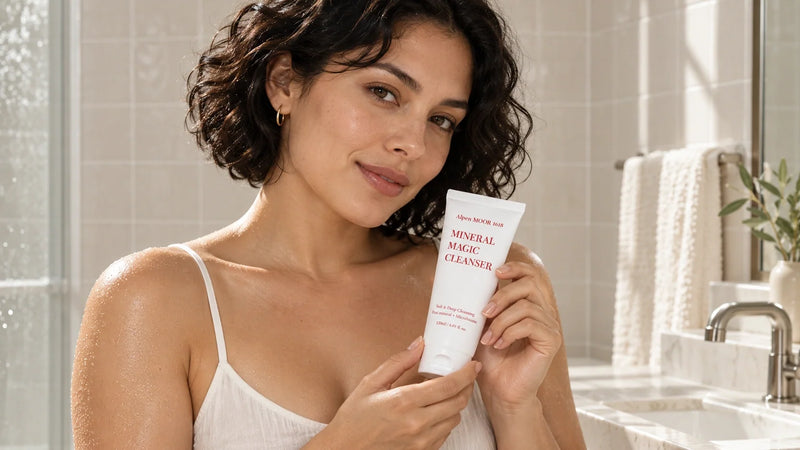
Our Mineral Magic Cleanser is a cream-to-foam cleanser blended with Fine Moor Powder. It turns into a cushiony lather and rinses clean, without a sticky or slippery residue. It helps remove sunscreen, excess oil, and daily buildup without a stripped feel.
We are not calling it an amino acid cleanser, because we have not published its surfactant makeup or pH. It also contains salicylic acid, which helps clear surface residue. If your skin is stinging or peeling right now, a simpler cleanser without acids may suit you better. A cleanser does not change pore size or treat acne. Our redness collection groups related products.
FAQ
Does a mild cleanser still remove sunscreen?
Often, yes, but it depends on the formula and how you wash. Massage it in for a little while before rinsing, and wash twice if one pass leaves residue.
Is sulfate-free the same as amino acid-based?
No. A sulfate-free cleanser can use many other surfactants, some milder than others. Amino acid-based is one specific group, so look for the actual ingredient names on the list.
Can a gentle cleanser still irritate me?
Yes. Mildness in a lab test does not rule out a personal reaction. Fragrance, acids, or other ingredients can bother sensitive skin, so patch test and stop if you feel stinging or burning.