Can oily areas still feel dehydrated?
Shine and tightness can show up on the same face. Oil is what skin makes, and hydration is the water held in the outer layer. A shiny T-zone alone does not tell you how hydrated the skin there is.
A 2025 narrative review in MDPI Bioengineering reports that harsh, stripping products can disrupt the skin barrier and trigger a rebound in oil production. Limits: it is a narrative review with no primary data, it links sebum to hydration rather than treating them as separate, and it does not say over-cleansing dehydrates skin. It supports only the over-cleansing part of this idea.
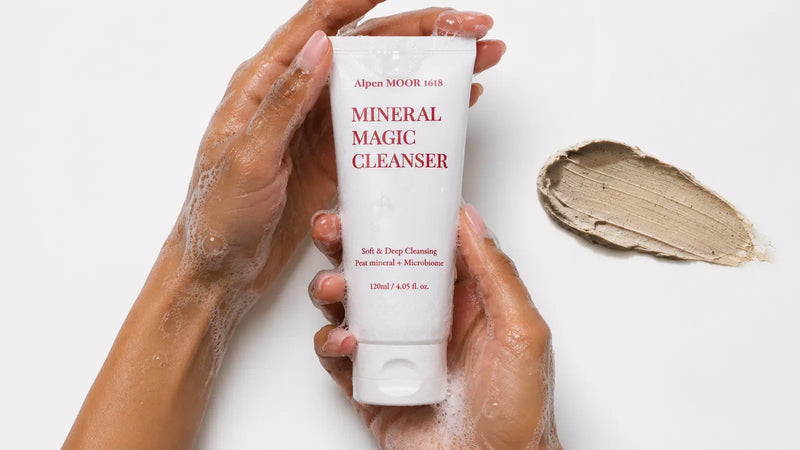
If your face feels tight after washing, look at the cleanser first. Our guide to a cleanser for combination skin covers that.
Does a hydrating mist make an oily T-zone worse?
It depends on the formula, and no mist suits every T-zone. A thin, watery mist adds little oil to the surface. A mist with a cream layer adds more, so it calls for a lighter hand on shiny areas.
Check the ingredient list, start with one light pass, and watch how the T-zone looks by afternoon. If shine increases, mist the cheeks only. Change one thing at a time so you can tell what caused what.

How do you mist different zones differently?
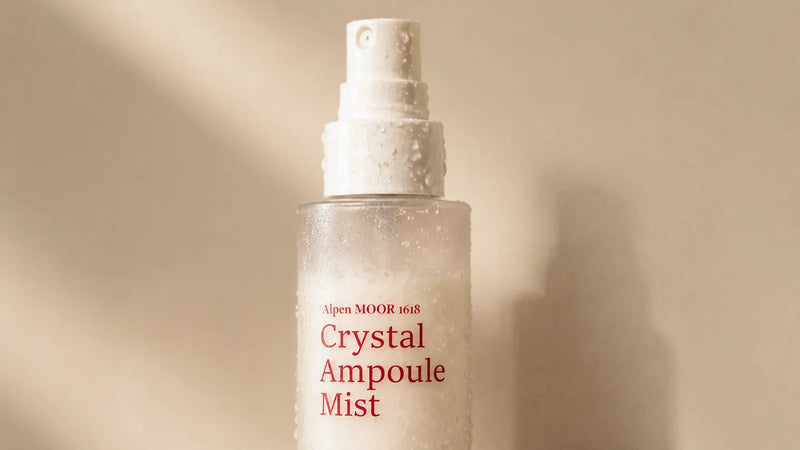
Our Crystal Ampoule Mist is a dual-layer face mist. Its description says a concentrated cream layer and a hydrating ampoule layer blend with every shake to replenish moisture and help seal it in. It lists mineral-rich Moor Water, triple hyaluronic acid, collagen, and elastin, which help replenish moisture and condition dry skin.
Shake well first so the layers blend. With your eyes closed, hold the bottle farther from the T-zone and press once. Move closer on the cheeks and mist again if they still feel dry. Let the mist settle before the next step.
| Zone | Amount and distance | What to apply after | What to avoid |
|---|---|---|---|
| T-zone | One light pass from farther away | A small amount of light moisturizer | Repeated passes or pressing in extra layers |
| Cheeks | One or two passes from closer in | A fuller layer of moisturizer | Leaving the mist to dry on its own |
What to know first: Crystal Ampoule Mist has a cream layer, so keep to one light pass on an oily T-zone and focus on dry cheeks. It is a two-layer mist, so shake it each time, and do not stop at the mist. Follow it with a moisturizer. It has no sun protection. Check the ingredient list for fragrance, and patch test if your skin is sensitive.
What should follow the mist?
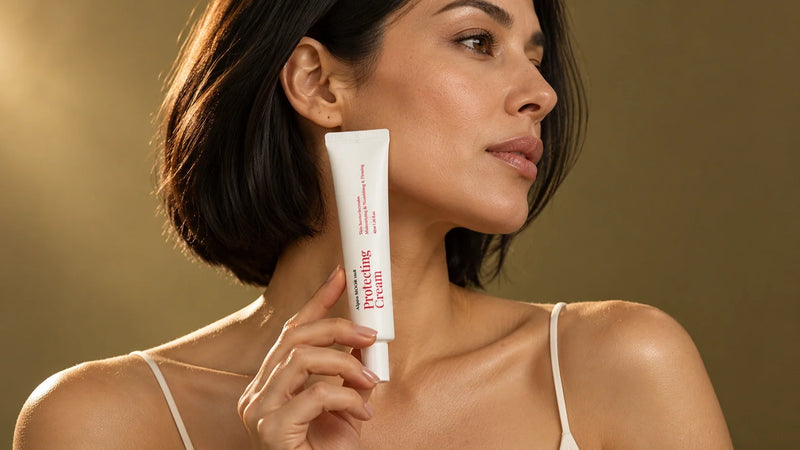
A mist adds water-based hydration, but water evaporates. A moisturizer afterward helps hold that moisture in. The mist's own cream layer is described as helping seal moisture in, yet it is not a substitute for your moisturizer.
A 2003 review article in the American Journal of Clinical Dermatology notes that moisturizers often contain humectants to hydrate the outer layer, and that petrolatum acts straight away on lipid-depleted skin. Limits: it focuses on dry skin barrier disorders in atopic and ichthyotic patients, not oily or combination skin, and it does not discuss hyaluronic acid or glycerin. Our pairing advice is an inference from it.
On the T-zone, a small amount of a light moisturizer is usually enough. On the cheeks, use a little more. For skin that often feels dehydrated, see our dehydration collection.

When is a mist not worth it for combination skin?
A mist is not worth it if you will stop at the mist, since it is only one step. Skip it if you expect sun protection, because it has none. If your skin is stinging or irritated, pause and ask a dermatologist.
If you are comparing steps, our guide to face mist vs toner explains how they differ. A mist is optional, and a gentle cleanser with a moisturizer already covers the basics.
FAQ
Can I use Crystal Ampoule Mist over makeup?
Its description says the lightweight micro-mist distributes evenly for skincare prep, makeup touch-ups, or a refreshing boost during the day. It layers comfortably over makeup and leaves skin looking smooth, dewy, and refreshed.
Why do I need to shake the mist?
The mist has two layers, a cream layer and an ampoule layer, and shaking blends them before each use. Without a good shake, the spray may not give you the mix the formula was designed to deliver.
What if my T-zone looks shinier after misting?
Mist the T-zone less, hold the bottle farther away, or leave that area out and mist only the cheeks. The cream layer is the reason to go lightly there. If the shine stays, stop using it on that area.