What is the difference between mineral water and thermal water mists?
Both are water-based face sprays. A thermal water mist is made from water that comes from a natural spring. A mineral water mist is a looser label, used for sprays made with water that contains minerals. The ingredient list tells you more than the front of the bottle.
Either type is a light, refreshing layer of water-based care, not a moisturizer or sunscreen. Here is how they compare with a dual-layer mist, which adds a cream layer.
| Type | What it is made from | What to expect | How to use it |
|---|---|---|---|
| Thermal water mist | Water from a natural spring | A light, refreshing water layer | Mist, then moisturizer |
| Mineral water mist | Water that contains minerals | A light, refreshing water layer | Mist, then moisturizer |
| Dual-layer mist | A cream layer and a water-based ampoule layer | A light layer with added moisture | Shake to blend, mist, then moisturizer |
Does the mineral content change what the mist does?
It is often assumed so, but the evidence is thin. A 2020 narrative review in the Journal of Clinical Medicine describes minerals as the main feature of thermal water for skin well-being, yet says few controlled clinical trials exist. Limits: no pooled analysis, literature searched only to May 2020, and a focus on bath therapy for psoriasis and atopic dermatitis, so it does not show what a facial mist does.
In practice, the word mineral on a label does not tell you how much is in the water or what it does for your skin.

What does the research actually show?
A 2023 nonsystematic literature review in MDPI Cosmetics covered 50 articles. It describes one well-known spring water as low in minerals and another as very high in minerality, and calls for more clinical trials on effectiveness and safety. Limits: no pooled effect size, no test of a mist or spray, no hydration or barrier measurements, and no answer on whether water alone needs a moisturizer.
Both reviews point the same way: spring waters differ in minerals, and neither tested a facial mist. That makes ranking one mist type over another hard, so we do not.
How do you use a water-based mist so it actually helps?
Think of it as one light step, not the whole routine. Mist your face, then apply moisturizer while skin is still slightly damp. This is a common routine habit, not a finding of either review. Our guide on how to use a hydrating face mist walks through the steps.
A mist does not provide sun protection, so add sunscreen in the morning. For tight, dehydrated skin, see our dehydration collection, and speak to a dermatologist if dryness persists.

Where does a dual-layer mist fit?
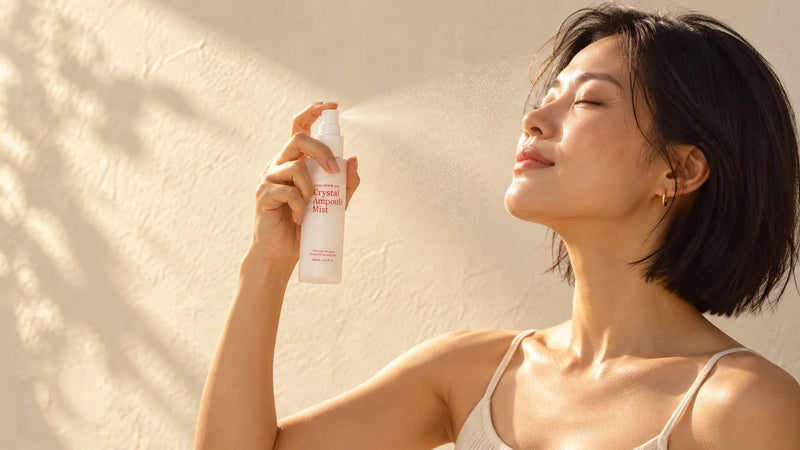
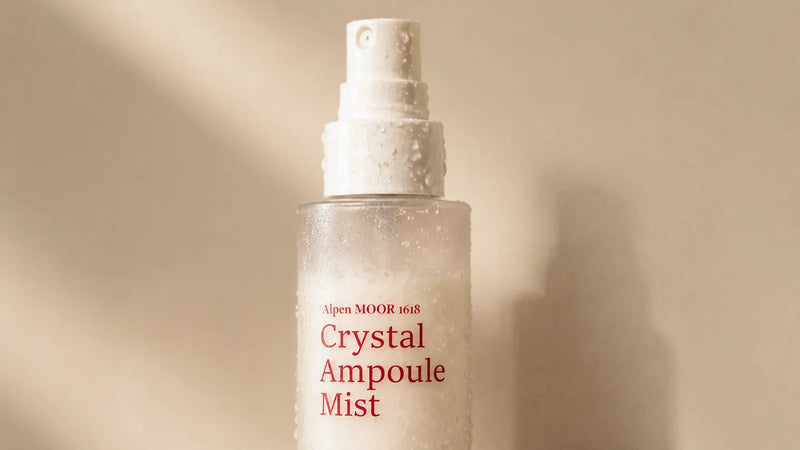
Our Crystal Ampoule Mist is a dual-layer face mist. A concentrated cream layer and a hydrating ampoule layer blend with every shake to replenish moisture and help seal it in. It is made with Moor Water, triple hyaluronic acid, collagen, and elastin, and the lightweight micro-mist layers comfortably over makeup. New to the format? See what an ampoule is in skincare.
Here is what it is not. Crystal Ampoule Mist is not a thermal spring water mist. It is a two-layer mist made with Moor Water, whose mineral content and composition we have not published, so we do not compare it with spring water. Shake it, follow it with a moisturizer, and add sunscreen separately, as it has no sun protection. Check the ingredient list for fragrance and patch test first.
FAQ
Does the word mineral on a mist tell me how much mineral is in the water?
No. The label alone does not say how much mineral the water contains or what that means for your skin. The reviews we read show spring waters vary widely, so check the ingredient list and the brand’s own information.
Do I need to shake Crystal Ampoule Mist?
Yes. It has two layers, a concentrated cream layer and a hydrating ampoule layer, and they blend with each shake. Shake it before every use so the mist comes out as one blended layer.
Can I use a face mist over makeup?
Crystal Ampoule Mist is made with an ultra-fine micro-mist that layers comfortably over makeup, so it works for touch-ups. Hold it at arm’s length, mist lightly, and skip it if you prefer a completely dry finish.
Is a thermal water mist better for sensitive skin?
Neither review we read tested that, so we cannot say. Sensitive skin reacts to individual ingredients, not to a label. Patch test any new mist on a small area, and ask a dermatologist if irritation continues.