What are closed comedones, and what causes them?
Closed comedones are small bumps that form when a pore is blocked beneath the skin surface. They are the whiteheads of acne, and open comedones are the blackheads. A clinical update for health professionals describes both types as common acne lesions (Australian Prescriber update).

They often show up on the forehead and chin. Causes vary, and skincare is only one possible factor. This is also why it is hard to find the culprit by guessing.
Can a moisturizer make closed comedones worse?
It can, in some cases. Breakouts linked to cosmetics have a name, acne cosmetica. A 2025 study of 151 patients and controls in one clinic found that certain products may raise the risk, and that the amount used and the ingredients both seemed to matter (CCID study).
That study relied on surveys and shows an association, not proof of cause. It does not name a single bad ingredient for everyone.
The practical takeaway is modest. Use a sensible amount, introduce products one at a time, and watch how your skin responds.
Should you stop moisturizing if you keep getting bumps?
Usually not. Dry, irritated skin is uncomfortable and can make a routine harder to stick with. A light moisturizer keeps skin comfortable while you work out what is going on.

The aim is not to avoid moisture. It is to choose a formula that feels light on your skin, and to apply a thin layer rather than a thick coat.
How do you check a moisturizer for closed comedones?
Do not rely on one label word. The same clinical update notes that non-comedogenic is not a regulated claim, so reading the ingredient list yourself is the more reliable approach. It is a general clinical update, not a study of any particular moisturizer.
| What to check | Why it matters | What to look for |
|---|---|---|
| Label claims | Terms like non-comedogenic are not regulated | Read the full ingredient list |
| Texture | Heavy films can feel like too much | Lotion or light cream |
| Oils and waxes | Rich ingredients may not suit every skin | Fewer thick oils and waxes |
| Fragrance | Can irritate reactive skin | Little or none |
| Your routine | Many new products hide the cause | Change one thing at a time |
If a product passes the list check, still test it on a small area. Your own skin gives the final answer.
Where does Protecting Cream fit?
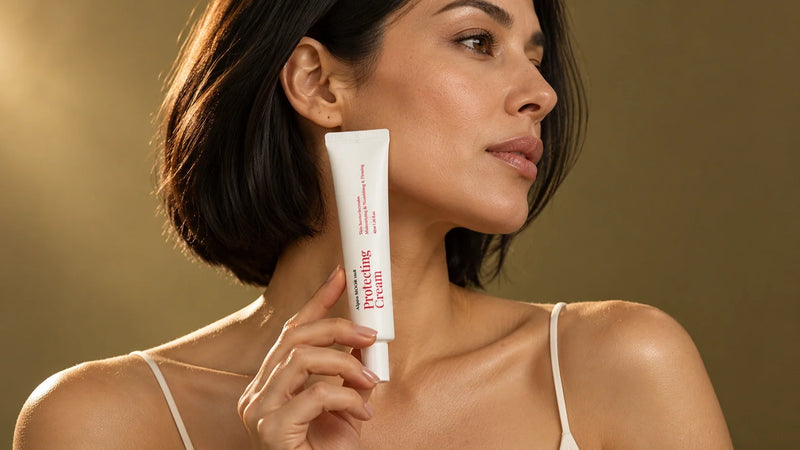
Our Protecting Cream is a daily barrier cream with a silky, fast-absorbing feel and a non-greasy finish. It pairs argan, sunflower seed and macadamia oils with peptides, adenosine and a prebiotic ingredient.
It contains fragrance and seed oils. If you get closed comedones, try it first on a small area, such as the chin, for two weeks before using it on your whole face. It does not treat comedones. Topical retinoids are described as core therapy for most patients, which is a question for a dermatologist.
If your skin is also dry, our guide to choosing a moisturizer for dry, acne-prone skin covers texture and patch testing. For help beyond moisturizing, read about what to look for in a cleanser for clogged-looking pores, or a gentle exfoliating cleanser routine. You can also browse our acne collection.
FAQ
Do closed comedones go away on their own?
Some do, but many linger or return. If bumps persist for weeks, spread, or become red and sore, a dermatologist can suggest proper treatment rather than leaving you to guess with products.
Can I use a moisturizer with fragrance if I get whiteheads?
You can, but fragrance is a common irritant, and irritation makes it harder to read your skin. A fragrance-free option is simpler, or test a scented one on a small area first.
Should I put moisturizer on before or after active treatments?
Follow the directions that came with your treatment or your dermatologist's advice. Many people apply moisturizer after treatments to keep skin comfortable, but timing depends on the product.